
Choosing a therapist for anxiety isn’t always easy. In fact, it’s often one of the first roadblocks people face on their path to healing. The internet is full of profiles, credentials, and treatment methods—but how do you know which therapist is right for you?
When anxiety is already overwhelming your thoughts and emotions, the process of finding support can feel like yet another source of stress. f you’re just beginning your journey and wondering what your first therapy session might involve, take a look at what to expect in your first anxiety therapy session.
At Dalliance Therapy Center in Parker, CO, we believe that the therapeutic relationship is the foundation of effective care. When you feel safe, understood, and supported, true healing begins. In this blog, we’ll walk you through what to look for in an anxiety therapist, and which questions to ask to ensure a strong fit for your personal needs and preferences.
Why the Right Fit Matters
Anxiety isn’t one-size-fits-all—and neither is therapy. Some people experience chronic worry, others struggle with panic attacks or social anxiety, while others deal with anxiety linked to trauma, perfectionism, or life transitions. Your therapist needs more than clinical expertise—they need insight into your experience and the ability to respond with empathy, structure, and adaptability.
The right fit isn’t just about credentials. It’s about finding someone you feel comfortable talking to—someone who listens without judgment and can challenge unhelpful thinking patterns with both skill and compassion.
Key Qualities to Look For in an Anxiety Therapist
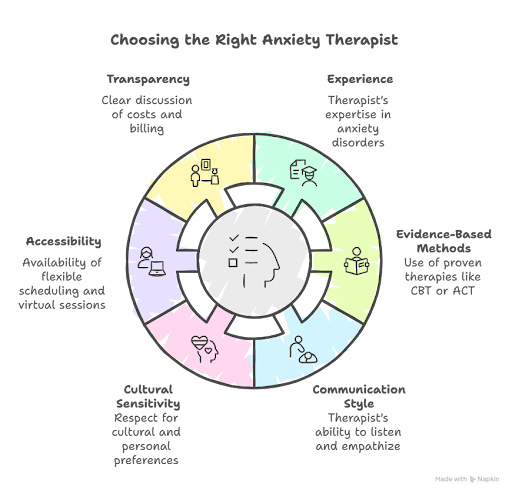
When reviewing potential therapists, there are several key traits to pay attention to. First, look for someone who has clear experience or specialization in treating anxiety disorders. They should be able to articulate their familiarity with conditions like generalized anxiety, panic disorder, or social anxiety. Additionally, a strong therapist will use evidence-based methods—such as Cognitive Behavioral Therapy (CBT), Acceptance and Commitment Therapy (ACT), or EMDR—and be able to explain these in a way that’s easy to understand. Their communication style matters, too: you should feel heard and respected during any initial conversations. A therapist who listens attentively and speaks with empathy will help you feel more at ease. Beyond that, consider whether they respect and align with your cultural background, language preferences, or gender-related comfort levels. Accessibility is also important—do they offer flexible scheduling or virtual sessions if needed? Lastly, a transparent discussion around costs, insurance, and billing is essential to ensure there are no surprises down the road.
Questions to Ask Before Committing to a Therapist
It’s okay—and encouraged—to ask questions before starting therapy. Here are a few that can help you make an informed decision:
- What is your experience treating anxiety?
- Which therapy models do you use, and why?
- Have you worked with clients who have anxiety similar to mine (e.g., social anxiety, panic attacks)?
- How do you tailor treatment plans to individual clients?
- Do you offer virtual sessions or in-person only?
- How long does treatment typically take, and how do you track progress?
- What happens if I feel stuck or overwhelmed during therapy?
- Do you work with co-occurring conditions like depression or trauma?
These questions don’t just provide information—they give you insight into how the therapist thinks, communicates, and engages with clients.
The Dalliance Approach to Matching Clients and Therapists
At Dalliance Therapy Center, we remove the guesswork. From your very first inquiry, our intake team works closely with you to understand your goals, challenges, and preferences. We then match you with a therapist who specializes in anxiety and aligns with your needs—whether you’re seeking structured CBT, gentle mindfulness work, or trauma-informed care.
We know how important trust is to the therapeutic process. That’s why our therapists aren’t just clinically skilled—they’re also deeply compassionate, culturally sensitive, and committed to ongoing professional development.
You Deserve a Therapist Who Gets You
Finding the right therapist can feel daunting, but you don’t have to do it alone. With the right match, anxiety therapy becomes not just effective, but empowering. It’s not about fixing you—it’s about helping you reconnect with your calm, your clarity, and your confidence.
If you’re in Parker, CO and ready to start, Dalliance Therapy Center is here to guide you—step by step, person to person. Reach out for a free consultation, and let’s find your right fit together.