Dear Reader,
January often arrives with an unspoken demand to reset—new goals, new habits, new versions of ourselves. While intention can be nourishing, pressure rarely is. From a therapeutic lens, sustainable change begins not with force, but with safety.
So many of us have learned to approach pleasure the same way we approach productivity: with expectations, timelines, and an internal voice asking, “Am I doing this right?” But desire doesn’t respond well to demand. Pleasure can’t be optimized or hustled into existence. It emerges when we feel resourced, relaxed, and free to choose.
This month, we’re inviting you to soften the grip of pressure and turn toward pleasure with curiosity instead. What happens when you listen rather than push? When you allow your body, your relationship, or your inner world to set the pace? Pleasure—sexual, emotional, relational, creative—is not something you owe anyone. It’s something you discover.
“When we loosen our grip on who we think we should be, we make room for what actually wants to be felt. Pleasure lives in the pause—where expectation softens and curiosity takes the lead.”
At Dalliance, we believe pleasure grows in spaces where there is room to breathe, room to say no, and room to change your mind. As you move through this newsletter, we invite you to notice where pressure shows up in your life—and gently ask what might be possible if you replaced it with choice.
With care,
Heather & Trish
Co-Founders and Clinical Directors at Dalliance Relationship Wellness Center
Be sure to check out our website www.dalliancetherapycenter.com
We invite you to stay connected with us via this newsletter, our Instagram page @dalliance_rwc, our Facebook page @Dalliance Relationship Wellness, our X (Twitter) page @dalliance_rwc, our Pinterest page @dalliance_rwc.

Redefining Pleasure
Pleasure isn’t limited to sex or peak experiences. It lives in the nervous system as moments of ease, warmth, interest, and embodied presence.
Pleasure can look like:
- A deep exhale after holding tension
- Being seen and understood
- Gentle touch or meaningful eye contact
- Moving your body in a way that feels good
- Choosing rest without guilt
When pleasure is decoupled from performance, it becomes accessible again.
Pressure and the Nervous System
Pressure—even subtle pressure—signals unsafety to the nervous system. When expectations around sex, intimacy, productivity, or self-improvement increase, desire often decreases.
From an attachment and polyvagal perspective:
- Safety invites curiosity
- Curiosity invites exploration
- Exploration allows pleasure to emerge
Desire cannot be commanded—but it can be invited.
Pleasure as a Pathway to Regulation
Pleasure is a powerful regulator. It helps widen the window of tolerance, softens defenses, and builds trust within ourselves and our relationships.
When pleasure is:
- Chosen, not required
- Exploratory, not goal-oriented
- Responsive, not prescriptive
…it supports both emotional and relational healing.
3 Ways to Practice Pleasure Without Pressure
1. Shift from Goals to Noticing
Instead of asking, “Did I enjoy this enough?” try “What did I notice?” Sensation, emotion, and curiosity are all valid outcomes.
2. Let Desire Be Responsive
Desire doesn’t always lead—it often follows safety, connection, and presence. This is especially true for many people socialized to perform rather than receive.
3. Name the Unspoken Expectations
Pressure loses power when it’s named. Try gently asking yourself or your partner:
“What do we think is supposed to happen here?”
3 Signs Pleasure Is Being Blocked by Pressure
- You feel anxious about outcomes rather than present in the moment
- You’re focused on how you’re being perceived
- You’re overriding bodily signals to meet expectations
None of these are failures—they’re signals asking for more gentleness.
Dalliance in Practice
A Monthly Therapeutic Tool From Our Couch to Your Inbox

The Pleasure Check-In
Try this brief reflection—alone or with a partner:
- What feels nourishing to my body right now?
- What feels like too much?
- What feels curious or neutral (not yes, not no)?
Pleasure doesn’t require certainty—only consent and curiosity
Dalliance Therapist In The Spotlight
Jacqui Maes, Clinical Intern

Can you tell us a bit about yourself and your background as a therapist?
I am a Marriage and Family Therapy graduate student and therapist intern who truly believes in the power of relationships, curiosity, and feeling understood (and in the fact that most of us are doing the best we can with what we were handed). My approach to therapy is relational and trauma-informed, grounded in the idea that our experiences, identities, and family systems all shape how we show up for ourselves and with the people we care about most.
I work primarily with individuals and couples, and I also enjoy working with teens (yes, even when responses are limited to shrugs or “I don’t know.”) I draw from attachment-based, experiential, and narrative approaches to help clients better understand their emotions, patterns, and needs. Therapy with me is collaborative and down-to-earth, with an emphasis on creating a space that feels supportive and non-judgmental, where clients can be real, slow things down, and say the things they’ve been holding onto.
I am especially mindful of how culture, identity, and life transitions influence the therapeutic process, and I strive to meet each client with warmth, curiosity, and compassion. As an intern, I value ongoing supervision and reflection and approach this work with humility and intention, knowing that meaningful change often starts with feeling truly seen (and maybe even laughing a little along the way).
What is your therapist superpower?
My superpower as a therapist is balancing warmth with honesty. I create a space where clients feel safe and understood, while also being willing to ask the questions that move therapy forward. I believe in meeting clients with compassion and curiosity, and in gently challenging patterns that may no longer be serving them. When appropriate, I also believe therapy can include moments of humor and ease—because growth does not have to feel heavy all the time.
What part of you has grown the most through being a therapist?
One of the biggest areas of growth for me as a therapist has been my awareness of how deeply our family of origin and generational patterns shape who we are. Through my training, I have learned to look beyond individual behavior and instead ask, Where did this come from?—both for my clients and for myself.
This work has invited me to reflect more intentionally on my own family system and the patterns that were modeled across generations. Developing that awareness has been incredibly grounding and empowering, helping me better understand my reactions, relationships, and values. It has also reinforced how meaningful it can be to recognize what we want to carry forward and what we may want to do differently.
Being a therapist has taught me that increased self-awareness is not about blame or perfection, but about choice. The more we understand our histories, the more freedom we have to respond with intention rather than habit and that insight has been just as impactful in my own life as it is in the work I do with clients.
How do you approach the therapeutic relationship with your clients?
I approach the therapeutic relationship as a collaborative partnership built on trust and mutual respect. My goal is to create a space where clients feel genuinely seen, heard, and accepted, while also knowing that therapy is an active process we engage in together.
I lead with curiosity and compassion, taking time to understand each client’s experiences, relationships, and cultural context.
Above all, I prioritize the relationship itself. I view the therapeutic alliance as a powerful foundation for change, and I work to show up consistently, authentically, and with care to create a space where meaningful insight, connection, and even moments of lightness can emerge along the way.
What is the most effective intervention you find yourself giving to clients lately?
One of the most effective interventions I find myself using lately is values-based work. I genuinely enjoy guiding clients through values exercises because they offer clarity, grounding, and direction—especially during times of transition or uncertainty.
I am not embarrassed to admit that I did not have a clear understanding of my own personal values until a few years ago, and gaining that awareness was incredibly impactful for me. Knowing what matters most has helped me make more intentional choices and better understand moments of tension or dissatisfaction in my life. I often find the same to be true for clients.
Values work helps clients explore whether their daily lives, relationships, and decisions are aligned with what they care about most. When there is a disconnect, that incongruence is often where distress shows up. Regularly checking in with values is important because they evolve over time, and staying attuned to those shifts can support more aligned, meaningful, and fulfilling choices.
What would you compare therapy to?
Therapy is a lot like going to the gym for your emotional and relational health (spin class, anyone?). Some sessions feel productive and energizing, others feel challenging and leave you a little sore, and progress often happens gradually. You do not see the results overnight, but with consistency and support, things start to feel stronger, more flexible, and more aligned.
What are your top 5 favorite wellness and self-care strategies
Monthly massage – A non-negotiable reset that helps me slow down, release tension, and reconnect with my body.
Spin class – My favorite way to clear my head, boost my mood, and get some energizing movement in.
Walking the dogs – Equal parts exercise, fresh air, and built-in mindfulness (plus a reminder to stay present).
Reading a great book – Whether it’s fiction or something reflective, reading helps me unwind and step out of “therapist brain.”
Getting outdoors – Sunshine, nature, and time outside are grounding and always help me feel more balanced.
What are you reading, listening to, or watching that you would love to share?
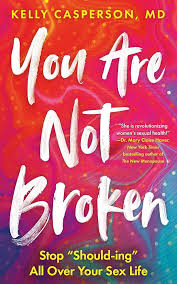
Reading: For leisure, I just wrapped up Fourth Wing by Fourth Wing by Rebecca Yarros. I may be late to the party, but I am officially hooked and racing to catch up before book four is released. For work, I’m currently reading You Are Not Broken by Kelly Casperson, which we received as a Christmas gift as a practice—can you say Dalliance Book Club?
Listening To: I’ve been listening to Kowloon—the perfect chill indie one-man-band to keep my nervous system regulated between sessions.
Watching: Daily episodes of Jeopardy! are a household staple, and we are big fans of Ken Jennings over here. I’ve also been loving Abbott Elementary—because after some deep work with clients, a good laugh is essential.
If you weren’t a therapist, what profession would you have?
If I weren’t a therapist, I would absolutely be a radio disc jockey. I hosted a radio show in college and loved every minute of it. From curating playlists to connecting with listeners and setting the tone for their evening. In many ways, it makes sense: I enjoy conversation, storytelling, reading the room, and creating a space where people feel engaged and heard. Different medium, same passion.
Why did you join the Dalliance team?
I joined the Dalliance team because their values deeply align with my own. From the beginning, it was clear that Dalliance prioritizes thoughtful, ethical, and relational work while genuinely caring about both clients and clinicians. I was drawn to the culture of compassion, collaboration, and intentional growth.
I also love being part of a small team of like-minded women who are driven, supportive, and grounded in care for the work we do. There is a strong sense of mutual respect and shared purpose, and it feels good to work alongside people who are passionate about showing up fully for clients and for each other.
Dalliance feels like a place where values are not just talked about, but actively practiced, and I am grateful to be part of a team that supports both meaningful clinical work and the humans doing it.

Check out www.dalliancetherapycenter.com to learn more about our expanded services! Along with our expertise in relationships and sexual wellness, we now offer compassionate support for anxiety, depression, life transitions, family therapy, and more. Our goal is to help you create a healthier, more fulfilling life—emotionally, mentally, and relationally. Whatever you’re going through, we’re here to support you every step of the way.
Pieces of Pleasure
Every month, we will be sharing the resources that are getting us thinking, learning & loving…
What We Are Listening To: Foreplay Radio—Desire Without Demand
What We Are Reading: You Are Not Broken by Kelly Casperson
What We Are Watching: Chef’s Table— Beautifully celebrates sensory pleasure, curiosity, and flow—showing how following your passion and senses can be deeply nourishing.